

Automation, Endurance, and the Will to Win: Tom Georgens 8P5A
Inside the mind of a world-class contester who built his dream station in Barbados—and made precision his edge.


On the far eastern edge of Barbados, Tom Georgens W2SC—known on the air as 8P5A—has built a contest station engineered to remove every possible distraction from operating. Amplifiers change bands without a touch. Antennas follow automated commands from the keyboard. Voice messages adjust dynamically to match the rate. Every function that can be automated has been—leaving the operator free to focus solely on the contest.
It wasn’t always like this for Tom.
Long before he built one of the most technically refined contesting platforms in the world, before he won CQ World Wide from a Caribbean island better known for rum than radios, Tom was a 13-year-old kid on Long Island, unmotivated at school, uncertain of direction, following his father—himself a war-interrupted ham—into the shack in search of something.
What he found was a trajectory.
The Long Game
Tom’s story is less about precocity than persistence. He didn't arrive on the contesting scene like a meteor; he worked his way into it slowly, deliberately, and decades into adulthood. While others were racking up plaques in their twenties, Tom was changing diapers and building a business career. It wasn’t until his mid-thirties, after a move to Massachusetts and a brush with Randy Thompson, K5ZD, that he started to taste real contesting success.

“Eventually I won an ARRL DX and a CQ World Wide from Randy’s station,” he says. “That tied me in plaques with my wife. She had already won two in CQ WPX operating in the novice/technician class.”
The competitive streak ran quietly, but deeply. And once it surfaced, it never left.
“Eventually I won an ARRL DX and a CQ WW. That tied me in plaques with my wife—she already had two.”
Despair in the Tropics
His first forays outside the continental U.S. were promising—good rates, warm sun, enthusiastic reports—but it wasn’t until he operated from the legendary 8P9Z station in Barbados that the real test began.
Twice, he entered CQ WW SSB with a goal: break the North American record.
Twice, he crashed out—mentally, physically, spiritually. One year he fell apart six hours before the end. The next year, with the record in sight, he collapsed again with just four hours to go.
“They were low points not just in radio, but in my life,” he admits. “I had never felt so completely defeated.”
Then came a twist. The owners of the station informed him they were pulling the plug—no more contest rentals. The place was being shut down. Maintenance was too much. The dream was over.
Or not.

“My wife and I were walking the grounds, and I said, ‘What if we took it over?’ She said yes. So I sent a note to the owner. His reply was: ‘Tom, don’t get involved. I tell you that as a friend.’”
Tom got involved.
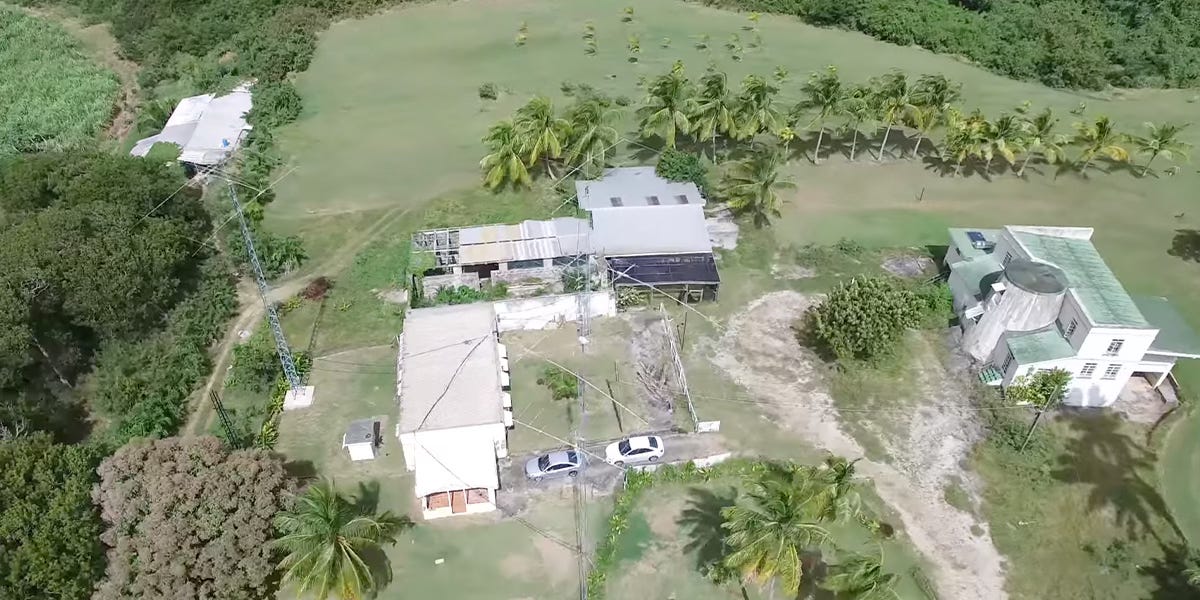
He bought the towers. Took over the lease. Began the long slog of fixing what was broken and learning what would always break next.
Within a year, he returned. This time he was prepared—hydrated, focused, mentally trained for the Sunday drag. Not only did he break the record; he won the contest outright.
Building the No-Knobs Station
Years later, when the lease on the original 8P9Z property ended, Tom chose to stay in Barbados—rebuilding from scratch at a new location, drawing on two decades of hard-won local knowledge.
From that moment, 8P5A wasn’t just a callsign. It was a workshop.
“I eventually got as much satisfaction from rebuilding the station as from operating it,” he says. “The goal became no knobs—keyboard only.”
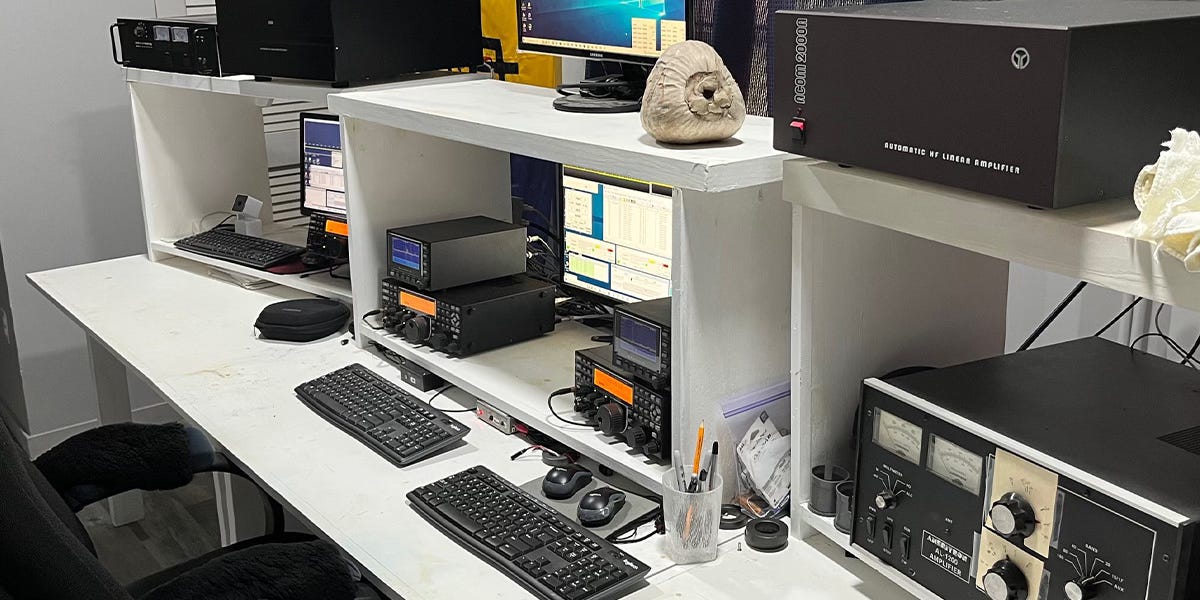
What followed was a slow-motion reinvention of Caribbean contesting. Every component, from the antenna switching to the voice keying to the dual-radio integration, became subject to Tom’s automation ethic. He didn’t just log contacts—he wrote wrappers around WriteLog to automate rate-adaptive voice messages, real-time antenna switching, even headphone audio routing. The amplifiers? Homebrewed. The station switching? Software controlled. No physical switching necessary—remote or in-person.
“I’m not best at anything,” he says. “Except maybe persistence.”
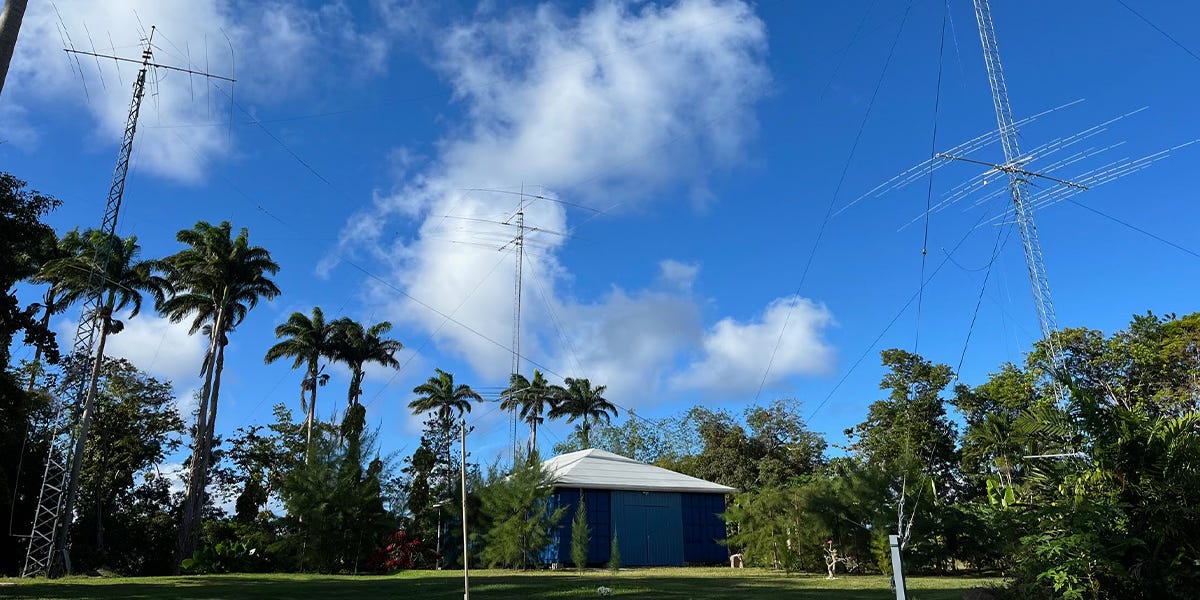
That might be underselling it. Tom's performance records are elite, but it’s the total system—design, discipline, automation, planning—that makes his contesting style formidable. The gear doesn’t make the op. But Tom makes sure it never gets in the way.
“After 40 hours, even simple becomes hard. So the station needs to be effortless.”
Working From the Edge
Operating from Barbados isn’t without its frustrations. Being in North America means losing out on three-point contacts. It also means getting outgunned by other stations who can match or beat your rates.
Tom doesn’t complain. He tracks his own goals. “Sunday morning I set a target. Not unrealistic, not easy. That way, the time never feels long. You’re chasing something.”
He doesn’t watch the scoreboard either—not during the contest. “Too many variables. I upload to it, because it’s good for the sport. But I don’t look at it.”
He prefers intuition—what he calls “the sense when things aren’t right.” That comes from decades of operating. You know when the walls are closing in. You feel when you’re not loud anymore.
Preparation takes over where talent might falter. “After 40 hours,” he says, “even simple becomes hard. So the station needs to be effortless. Every cable you don’t need to touch matters.”
That level of preparation wasn’t limited to contest weekends—Tom spent much of his career as the CEO of a Fortune 500 tech company, managing teams, earnings calls, and Wall Street expectations while building his dream station in his off-hours.
And yet, for all the rigor, there’s still room for romance.
“My wife didn’t sign up for tower work,” he jokes. “She thought owning a Caribbean station meant beaches while I operated. But she’s been in the mud and rain with me, every year.”
Looking Ahead
Tom sees no contradiction between building a high-end station and embracing change. He’s an engineer, not a nostalgic.
Asked about the future of ham radio, he doesn’t sugarcoat it. “If we insist it has to look like what it used to, we risk becoming Civil War reenactors.”
“If we insist it has to look like what it used to, we risk becoming Civil War reenactors.”
His answer isn’t digital cheerleading—it’s generational humility.
“I don’t think people like me will invent the next ham radio. I think it will be the next generation. Maybe it looks more like gaming. Maybe it’s AI-driven. Maybe it’s hybrid. I don’t know. But the core? The community? The technical pull? That has to stay.”
He credits ham radio with changing his life. It led him to engineering, gave him purpose as a teen, and reconnected him with his father in ways that school and sports never could. That bond, forged in schematics and static, echoes in every clean contact made from 8P5A.
There’s no knob for that. Just a lifetime of learning to listen.


Watch the Q5 video interview here:
Proudly sponsored by DX Engineering—trusted by the world’s top contest stations, expedition teams, and everyday operators who demand the best.

Nice story and what a competitive lifestyle !
Thanks, Kevin! Great article.